Bedding · Mattress Education
Organic Mattress Toppers: How to Choose the Right Layer for Your Bed
A topper can make a mattress feel softer, add a modest cushion, or change the character of the surface without asking you to replace the bed beneath it. The useful question is not which material sounds most virtuous, but what you want the layer to do—and whether its construction, fit, and care requirements suit the way you sleep.
Published October 12, 2026
There is a particular optimism in making a bed more comfortable without buying an entirely new one. A mattress topper promises a smaller intervention: a layer between the sleeper and the mattress, intended to soften a surface, add a little loft, or adjust the feel of a bed that is otherwise still serviceable. It is a practical idea, and sometimes a successful one. It is also easy to misunderstand. A topper is not a new mattress in miniature, and “organic” does not, by itself, tell you how it will feel, how it will fit, or whether you will enjoy caring for it.
Choosing well begins with a precise account of what is wrong—or simply what could be better. Does the mattress feel too firm at the shoulders and hips? Is the surface comfortable but a little bare? Do you tend to wake feeling warm? Are you trying to protect the mattress as much as change its feel? Those are distinct aims, and they call for different constructions. An organic mattress topper may be made with wool, cotton, or a blend of materials, but the label matters less than the work the layer is designed to perform.
For readers in Chicago, where winter heating, summer humidity, older buildings, and compact bedrooms can all shape the experience of sleep, a topper is one part of a larger environment. It cannot quiet the Blue Line, correct an unsupportive mattress, or solve a health problem. It can, however, be a thoughtful adjustment to the surface you sleep on—provided expectations remain proportionate.
First decide what you want to change
“More comfortable” is a sensible instinct, but a slippery specification. Before comparing natural mattress toppers, describe the discomfort in concrete terms. A mattress that feels hard across the whole body may benefit from a cushioning layer. A mattress that feels acceptable but slightly unwelcoming may need only a thin pad. A surface that feels warm or clammy may prompt interest in breathable fibers and moisture management. These are not interchangeable problems.
A topper generally changes the first impression of a mattress more than its underlying support. It can soften the contact surface and create a little separation between the body and the mattress. It will not reliably repair sagging, restore a worn-out core, or change the support characteristics of a bed that has reached the end of its useful life. If there is a visible dip, an uneven base, or persistent discomfort that seems connected to the mattress structure, adding a soft layer may disguise the issue rather than solve it.
Think about the change you want in terms of degree as well as direction. Someone seeking a gentle cushion may prefer a relatively slim, lightly filled pad. Someone hoping for a noticeably plusher surface may need a more substantial topper, while accepting that a thicker layer may alter the way sheets fit and the way the bed feels when moving between sleeping positions. A small adjustment is often easier to live with than a dramatic one, particularly when the underlying mattress is already close to right.
It can help to keep a short note for several nights: where pressure is felt, whether the sensation changes with sleeping position, and whether warmth or moisture seems to be part of the problem. A topper cannot guarantee relief from pain, and recurring or severe symptoms deserve appropriate clinical advice. But a clearer description of the problem makes it easier to assess whether a surface layer is a reasonable experiment.
Wool, cotton, and the feel of natural materials
Material names are a beginning, not a verdict. Wool and organic cotton are often chosen for their natural-fiber construction, but they behave differently and are made into products in different ways. The fiber, fill density, quilting, shell fabric, and thickness all contribute to the final feel. Two products described with the same broad material name can therefore provide noticeably different experiences.
Wool: loft, resilience, and moisture handling
Wool-filled layers are often valued for a springy, cushioned feel and for their ability to absorb and release moisture. In bedding, these properties may help create a more comfortable microclimate at the surface. Wool is not a temperature-control switch: the warmth you experience depends on the amount and arrangement of fill, the cover, your sheets, bedroom conditions, and your own comfort preferences. A wool topper may feel pleasantly substantial to one sleeper and too warm or lofty to another.
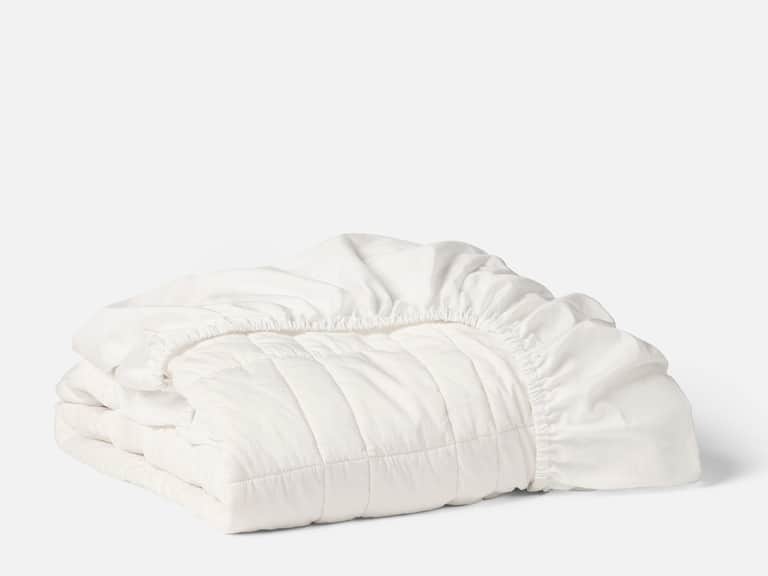
Construction can make a significant difference. Quilting or baffles help keep fill distributed, while the type of shell influences how the surface feels against the sheet. A blend may also contain fibers other than wool. For example, the Washable Wool Filled Mattress Pad combines 85% NATIVA wool from Uruguay with 15% plant-based batting and has a 100% organic cotton shell. It is described as machine washable. Those details are more informative than the word “wool” alone: they tell you something about composition and care, while still leaving the actual feel to be judged in the context of your bed.
Wool products may also have a natural scent, especially when new. That is not necessarily a sign of a defect, but it may matter to someone sensitive to odors. Check the care label rather than assuming all wool bedding can be washed at home; some constructions require a more cautious approach, and laundering instructions are product-specific.
Organic cotton: familiar, breathable, and varied
Cotton can appear as a shell, a quilted surface, or the fill itself. A cotton cover may contribute a familiar, smooth or crisp hand, while a cotton-filled pad can add a soft, comparatively straightforward cushion. The result depends on weave, quilting, fill weight, and how the item is finished. Cotton is not automatically thin, cool, or firm; those qualities cannot be inferred from the fiber name alone.
When a product is presented as organic, look for the specific scope of the claim. Is the shell certified, the fill certified, or the complete finished product? A material description and a certification are different kinds of information. Product details may state a certification, such as GOTS, but it is sensible to check exactly what the certification covers and whether the certification applies to the item you are considering. “Natural” is a broad descriptive word, not a substitute for documentation.
Other fibers sometimes appear in natural bedding, including silk, latex, and plant-based batting. Each brings different care and performance considerations. A topper with latex, for example, is not the same kind of layer as a lightly quilted cotton pad. Read the composition carefully, especially if you are avoiding a particular material or have a known sensitivity.
A topper is not always a protector
The language of bedding can blur useful distinctions. A mattress topper is generally intended to change the surface feel through cushioning or loft. A mattress protector is principally intended to form a barrier against spills, dust, or ordinary wear. A mattress pad may combine some cushioning with some protective function, but the term is used in different ways across products. Do not assume that a soft, quilted layer is waterproof, or that a waterproof protector will add meaningful plushness.
If protecting the mattress is the main goal, check for an explicit description of the barrier and its limits. If comfort is the main goal, focus on fill, thickness, quilting, and surface feel. If you want both, confirm that the product is actually designed to provide both. A layered bed can be arranged with a topper and a separate protector, though extra layers may change the feel and fit. The order of layers and the care instructions matter: a barrier placed over a soft topper can affect breathability, while a protector beneath the topper may not shield the topper itself from spills.
In a household with children, pets, or frequent guests, washability may be as important as initial softness. A washable layer can be easier to refresh, but “machine washable” should be read alongside the recommended cycle, detergent, temperature, and drying method. A bulky item may also be difficult to wash in a small apartment machine. Practical care is part of the product’s performance, not a footnote to it.
Check fit before you fall for the description
A topper that shifts, bunches, or leaves corners exposed can become a nightly irritation. Compare its listed dimensions with the mattress dimensions, and check how it is secured. Some products use elastic corner straps; others have fitted sides, a skirt, or no attachment system. The right arrangement depends on the mattress and on how much the sleeper moves. A secure fit is especially useful when a mattress is deep or when the topper is relatively lofty.
Measure the mattress itself rather than relying solely on its nominal size. A “queen” may correspond to standard dimensions, but thickness varies, and pillow-top or specialty mattresses can be deeper than expected. If the topper has a fitted skirt, verify the pocket depth. If it uses straps, consider whether they can reach around the mattress without pulling the layer out of shape. Also account for the combined height of the mattress, topper, and protector when checking fitted sheets.
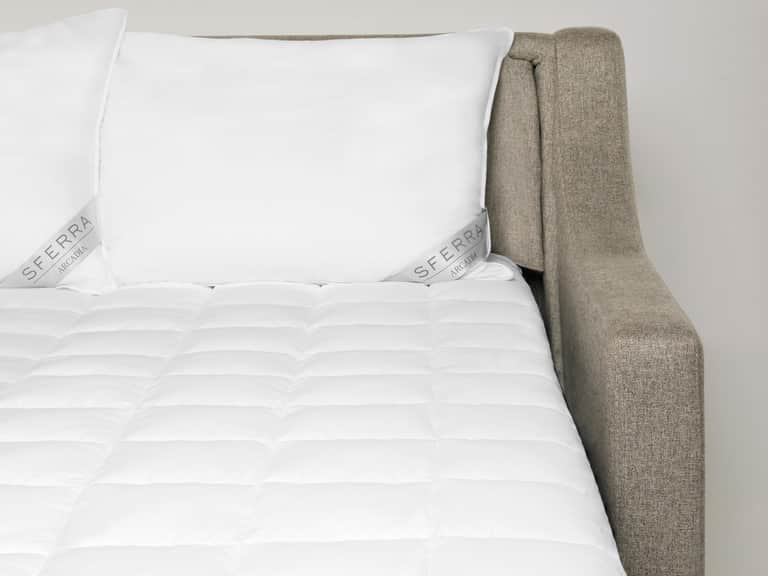
Dimensions matter for sofa beds and other nonstandard sleep surfaces, too. A pad made for a particular sofa-bed system may not fit an ordinary mattress, even when its general product description sounds suitable. Compatibility should be confirmed rather than inferred from a shared word such as “mattress.”
Care is part of comfort
The best natural mattress topper is not necessarily the one with the most impressive list of fibers. It is one whose care requirements you can realistically meet. Check whether the whole item can be washed or only a cover can be removed. Look for instructions on water temperature, cycle, detergent, drying, and whether the product should be professionally cleaned. Follow the label: wool, cotton, and mixed fills can respond differently to heat, agitation, and moisture.
Drying deserves particular attention. A thick or densely filled layer may take longer to dry than expected. Incomplete drying can leave bedding damp, so plan for enough airflow and time before putting the topper back on the bed. If the instructions recommend a low-heat tumble dry, do not assume a high-heat cycle will simply save time. If a product requires dry cleaning, factor in the expense and inconvenience before deciding that it is the right everyday layer.
Regular airing and prompt attention to spills can help keep a bed fresher, but care practices should remain consistent with the manufacturer’s guidance. Do not treat “hypoallergenic” as a medical guarantee or assume that an organic material eliminates the possibility of sensitivity. People can react to natural materials as well as synthetic ones. If a known allergy or skin condition is part of the decision, review the full composition and seek appropriate professional advice when needed.
Certifications and the meaning of “organic”
For shoppers seeking organic bedding, certification can help make a materials claim more specific. It is worth looking for the name of the certifying standard and determining what it applies to: fiber, processing, finished textile, or another part of the product. A certification should not be treated as proof that a topper will be comfortable, durable, or suitable for a particular sleeper. It answers a narrower question about defined standards and processes.
Read the full materials list, not just the product title. A cotton shell may surround a different fill; a wool blend may include plant-based batting; elastic, thread, or backing may be made from other materials. None of these details necessarily makes a product unsuitable, but they matter if you are trying to meet a specific preference. Ask whether the claim is product-wide or applies only to one component, and consult the documentation where available.
It is also useful to separate environmental considerations from sleep performance. A product may use responsibly sourced fibers and still be too warm, too firm, or too difficult to care for in your circumstances. Conversely, a comfortable layer does not become organic merely because it uses a natural-sounding name. Clear labeling supports informed choice; it does not make the choice on your behalf.
A practical comparison before you buy
When comparing two or three options, set aside the most decorative language and place the facts side by side. Start with the intended change in feel, then look at material and construction. Record the dimensions, fit method, mattress-depth compatibility, care instructions, and the precise wording of any organic or other certification. If warmth is a concern, consider the whole bed: topper, sheets, duvet, sleepwear, and room conditions all contribute.
Ask what evidence would make you confident in the choice. A clear fill breakdown is more useful than a vague claim of “natural comfort.” A stated pocket depth is more useful than “fits most beds.” A specific washing instruction is more useful than “easy care.” Product descriptions are most helpful when they describe observable construction and practical limits rather than promise a universal sleep result.
Where possible, learn the return or trial terms before purchase. The same layer can feel different depending on the mattress beneath it, the sleeper’s build, sleeping position, and bedding. A return policy does not remove the need to read care and fit details, but it can reduce the risk of making a decision based only on a description.
- Purpose: Decide whether you want more softness, a little extra loft, surface protection, or a combination.
- Composition: Check the shell and fill separately, including blends and any backing or skirt materials.
- Construction: Note thickness, quilting or baffles, and whether fill is designed to stay evenly distributed.
- Fit: Compare the topper’s dimensions and attachment system with your mattress depth and size.
- Care: Confirm washing and drying instructions, and consider whether the item will fit your laundry setup.
- Claims: Verify what any certification covers; do not equate “natural” with certified organic.
Common misconceptions about organic mattress toppers
“Organic” means it will be cooler
Not necessarily. Temperature comfort depends on the complete construction and the sleep environment. A fiber may handle moisture in a way some sleepers appreciate, but fill amount, fabric, bedding layers, room temperature, and individual preference all matter. Seek specific material information, not a blanket promise.
A thicker topper is always more comfortable
Thickness can add a more noticeable cushion, but it can also change the bed’s feel, affect sheet fit, and make the layer harder to handle. More loft is not automatically better for every sleeping position or every mattress. The useful question is whether the added depth addresses the particular discomfort.
A topper can fix any mattress
A topper can alter the surface; it cannot restore a failing support system. If the mattress is sagging or substantially worn, a new layer may offer only a temporary cosmetic improvement. Consider the condition of the mattress and its foundation before investing in a surface adjustment.
All wool or cotton products can be washed at home
Care varies. Some products are machine washable; others may require more specialized cleaning. Even among washable items, temperature and drying instructions differ. The fiber name alone does not tell you how to launder the finished product.
The Chicago bedroom: comfort in a real room
Sleep does not happen in a product description. In a Chicago apartment, the bed may sit beside a radiator, beneath a drafty window, or along a wall that carries the low, familiar sounds of city life. A topper can change surface cushioning, but the room remains part of the calculation. If the bed feels too warm, consider whether the duvet, mattress protector, or room temperature is contributing before adding another insulating layer. If noise is the problem, a topper is unlikely to be the relevant intervention.
Smaller rooms also make storage and laundering unusually practical questions. Where will a bulky topper go when it needs airing or cleaning? Can it be dried properly? Will a deeper layered bed still work with the existing sheets and bed frame? These are ordinary questions, but ordinary questions tend to determine whether bedding remains pleasant after the first week.
A calm sleep environment is built from several modest decisions: appropriate light in the evening, a comfortable room temperature, a mattress that offers adequate support, and bedding that suits the sleeper. A natural mattress topper may be one of those decisions. It need not bear the burden of transforming the entire night.
A measured choice, not a miracle layer
The right topper begins with an honest diagnosis of the bed. Identify what you want to change; distinguish surface softness from support and protection; then compare materials, construction, fit, certifications, and care. Wool may appeal for its resilient loft and moisture-handling qualities. Organic cotton may suit someone looking for a familiar textile surface or a cotton-filled layer. Neither choice is inherently right for everyone, and the details of a finished product matter more than a fiber name in isolation.
When a product provides a precise composition, clear fit information, and realistic care instructions, it gives you a better basis for deciding whether it belongs on your bed. When it relies on broad assurances, ask for specifics. Comfort is personal, but the questions that make a sound decision are quite concrete.
A topper cannot make every mattress new. It can, in the right circumstances, make a good mattress feel a little more like yours: softer at the surface, better suited to your preferences, and easier to keep comfortable over time. That is a modest promise. It is also the one worth making.
Frequently asked questions
What is the difference between a mattress topper and a mattress pad?
Usage varies, but a topper is generally intended to create a more noticeable change in cushioning or surface feel. A mattress pad may be thinner and may emphasize protection, light cushioning, or both. Check each item’s construction and stated purpose rather than relying on the name alone.
Does an organic mattress topper have to be made entirely of organic materials?
Not necessarily. Claims may relate to a particular fiber or component rather than every part of the finished product. Review the full materials list and the scope of any certification to understand what is covered.
Is wool a good choice for a mattress topper?
It may suit sleepers who like a resilient, cushioned surface and value wool’s moisture-handling characteristics. The right choice depends on fill amount, construction, care needs, and personal comfort. Check whether the specific product is washable or requires another form of cleaning.
Can a topper make a firm mattress softer?
It can soften the feel at the surface, though the degree of change depends on its thickness and fill and on the mattress beneath it. It is unlikely to correct a mattress that is sagging or no longer provides adequate support.
How do I make sure a topper will fit?
Measure the mattress dimensions and depth, then compare them with the topper’s specifications. Check pocket depth or strap design, and allow for the added height when choosing fitted sheets.