Choosing an Organic Latex Mattress: A Practical Guide for Chicago Sleepers
A whirl of city lights, apartment walls, and the quiet insistence of circadian rhythms—Chicago is a place where sleep becomes a small civic act. This guide, written for readers who want a non-toxic, respiration-friendly rest, navigates the landscape of organic latex mattresses through the lens of local availability, sleep science, and consumer education. It blends science, craft, and street-level practicality into a narrative about better nights in the Windy City.
Keywords in focus: organic latex mattress, latex mattress Chicago, non-toxic mattress Chicago, sustainable bedding Chicago, Savvy Rest latex, Coyuchi latex.
Introduction: The Case for Organic Latex
Latex, particularly the Dunlop or Talalay varieties used in organic mattresses, sits at a crossroads of comfort, durability, and environmental consciousness. Unlike conventional foams, organic latex is typically produced with fewer volatile organic compounds (VOCs) and without the chemical fire retardants that sometimes accompany synthetic foams. For urban sleepers—pulsing with city noise, heat, and the constraint of apartment sizes—the breathability, resilience, and temperature regulation of latex can translate into deeper, more restorative sleep.
But what does “organic” mean in this context? In mattress terms, it largely rests on two pillars: certifications that verify the absence of certain chemicals and the responsible sourcing of latex, wool, cotton, and other components. The most meaningful signals are independent standards such as Global Organic Latex Standard (GOLS) for latex, Global Organic Textile Standard (GOTS) for fabrics, and Responsible Down Standard (RDS) where down is involved. For a Chicago buyer seeking non-toxic options, these certifications act as the quiet guardrails that help separate promise from practice.
Brand Landscape in Chicago: The Local-Global Blend
Two names frequently surface in Chicago’s eco-conscious bedding conversations: Savvy Rest and Coyuchi. Savvy Rest has a legacy of handcrafted, fully adjustable latex mattresses that emphasize organic wool and cotton in the cover, and Dunlop or Talalay latex layers—allowing a level of customization that can be crucial for sleepers with specific support needs. Coyuchi, meanwhile, is often celebrated for its organic cotton basics and its foray into natural latex options that pair textile purity with a transparent supply chain. These brands illustrate a broader truth: Chicago shoppers can access brands rooted in ecological ethics without stepping into a showroom that smells of solvent-laden adhesives.
Importantly, the local availability of these brands—whether through Chicago boutique sleep shops, or through nationwide e-tailers that ship to the metro area—helps demystify the purchase. When you can sit on a latex mattress locally or in a nearby showroom, you can better assess contouring, firmness, and heat dissipation in the city’s apartment-appropriate sleep setups.
Beyond named brands, the Chicago market often incorporates mattresses and toppers from outside the city that meet the same organic standards. A reader in Chicago can use local retailers as a touchstone for evaluating certifications, materials, and construction quality, then apply that understanding to a broader catalog of latex options.
Practical Buying Tips: Certification, Firmness, and Showroom Strategy
The path to a non-toxic latex mattress begins with certifications. When you encounter terms like GOTS, GOLS, and Oeko-Tex, you should be asking: Who certifies the product, and what exact standards do they verify? It is not enough to see a logo; you want to know the scope of certification (e.g., the latex, the fabrics, the coatings). For latex, the presence of Dunlop or Talalay layers is a structural choice that shapes feel. Dunlop latex tends to be denser and more supportive, while Talalay offers a lighter, more uniform feel. A common setup in organic latex mattresses is two or more latex layers, allowing you to customize firmness by swapping layers or adjusting your topper strategy.
Firmness is a tactile attribute that should be assessed across sleeping positions. Side sleepers tend to prefer a bit of pressure relief near the shoulders, while back sleepers often prioritize spinal alignment. The goal is to read the surface as a personality—how it cradles your hips, where it invites you to sink, and where it offers a supportive boundary at the edge of the bed. In a Chicago showroom, you can test how the mattress responds to shifts in position that reflect an urban night’s routine: a restless leg, a change in temperature, or a mid-night stretch.
In showroom conversations, frame questions around the brand’s organic narrative, the sourcing of latex, and the durability of the cover materials. A non-salesy inquiry might be: “How does the cover manage heat and moisture, especially in a compact Chicago apartment?” The best showroom experience feels like a guided tour of the product’s promises and limitations, rather than a sales pitch. Look for seams that are evenly stitched, layers that respond predictably to pressure, and a cover that breathes.
The Arcadia Mattress Pad: A Practical Companion
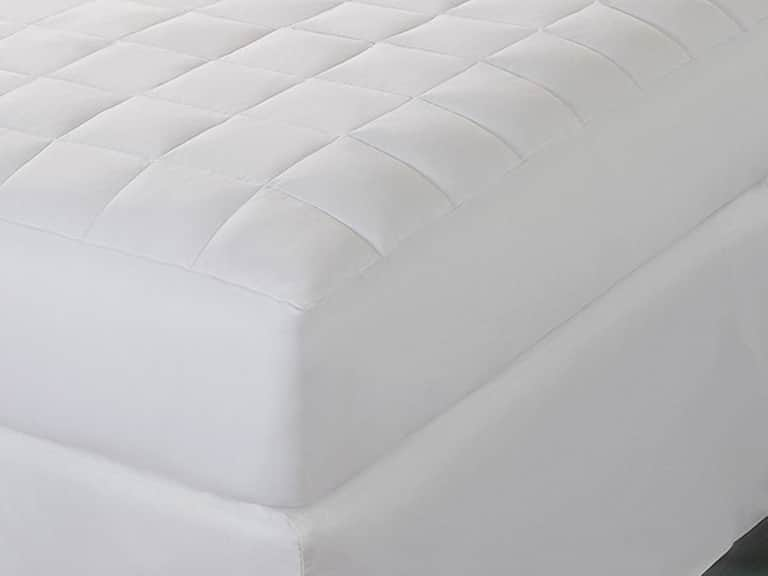
In the continuum of sleep comfort, a well-chosen mattress pad can be a quiet but transformative addition. Consider a model like Arcadia Mattress Pad, which offers pluma-fil down-alternative fill and a 330-thread cotton sateen shell. The 6-inch sewn-through box construction keeps the loft evenly distributed, ensuring that the pad contributes to a balanced sleep surface rather than creating inconsistent pressure points. Though not a replacement for a proper latex mattress, a well-made pad can extend the mattress’s lifespan, add a layer of softness, and improve overall comfort in a climate-controlled Chicago apartment.
What makes Arcadia a compelling option for Chicago sleepers is its combination of comfort and practicality: a secure fit up to 17 inches deep, a breathable cotton shell, and care-friendly machine-washable design. In a city where many beds are tucked into cozy bedrooms, a pad that stays in place and is easy to care for becomes not just a luxury but a necessity for daily life.
Arcadia Mattress Pad
- Material: Pluma-fil down-alternative; 330-thread cotton sateen shell
- Construction: 6-inch sewn-through box; even loft
- Fit: Elasticized sides; up to 17" deep mattresses
- Care: Machine washable
View Arcadia Mattress Pad
Three Key Individuals Across Time: A Sleepline
Hippocrates (c. 460–370 BCE)
The father of medicine would scarcely recognize our modern bedroom ecology, yet his insistence on balance and temperance prefigures the modern sleep hygiene movement. In the context of latex and organic fabrics, his obsession with natural materials—linen, wool, pure fabrics—echoes in today’s emphasis on breathable, chemical-free surfaces. If Hippocrates advised a regimen of balance, he might approve of organic latex for its natural resilience and its ecological footprint aligned with a healthier body and a healthier home.
Florence Nightingale (1820–1910)
A reformer who insisted on sanitation, precision, and evidence-driven care, Nightingale’s ethos travels to the modern showroom: seek evidence, demand clarity, and demand durable materials that support long, restorative sleep. Her legacy—clean linens, clean air, and systems thinking—maps onto today’s demand for certifications and transparent supply chains in bedding.
Savvy Rest Founders (21st century)
Bringing organic latex, wool, and cotton into a contemporary American market, the Savvy Rest founders personify the current wave of consumer-centric, environmentally aware sleep systems. Their approach—customizable latex layers, organic covers, and transparent material sourcing—embodies the operational ideal of the Chicago-inspired local-sleep education hub: expertise without the snobbery, care without coercion.
Local-Global Synthesis: How to Shop in Chicago
For Chicago sleepers, the path to an organic latex mattress begins with knowing what to ask. A practical checklist for the showroom: confirm latex type (Dunlop vs Talalay), confirm organic certifications (GOLS, GOTS), verify the cover’s material (GOTS-certified cotton or equivalent), test the surface across multiple positions, and consider a topper as a modular tool for firmness adjustments. Because space in Chicago often means smaller bedrooms, you may want a mattress with excellent edge support and a design that breathes well in a compact climate.
Local retailers and showrooms are not just sales points; they are educational spaces where you can learn about the lifecycle of the mattress. Inquiring about the brand’s supply chain, the origin of latex, and the treatment of wool and cotton helps you read the product like a document—evidence-based and transparent. This is the heart of a Chicago sleep culture that values both science and stewardship: a city that understands the relationship between breath, temperature, and the quality of the night before a big day.
Glossary: Terms to Know
- Bedding essentials: The textiles that surround the mattress, including organic cotton covers and wool toppers, designed to regulate temperature and support hygiene.
- Latex (Dunlop vs Talalay): Two common latex manufacturing methods; Dunlop is typically denser, while Talalay is lighter and more uniform in feel.
- GOLS / GOTS: Global Organic Latex Standard (latex) and Global Organic Textile Standard (fabrics); certifications that signify organic origin and ethical processing.
- PLM (Pluma-fil): A down-alternative fiber often used in mattress pads and toppers for a lofty, cloud-like feel.
- RDS: Responsible Down Standard, a certification for down used in bedding to ensure animal welfare.
Conclusion: A Sleep-Health Prospectus for Chicago
Choosing an organic latex mattress is less a deposit into a consumer cart and more a commitment to a nightly ritual: a ritual that favors breathable materials, transparent practices, and a surface that breathes with the room. In Chicago, where the rhythm of the day can feel like a city’s heartbeat under the floorboards, a latex mattress that emphasizes low toxin load and high resilience offers an invitation to rest—an invitation that is local in its orientation and universal in its pursuit of well-being.
As you plan your next purchase, consider that the best sleep strategy is not merely about the material beneath you but the ecosystem around it—certifications, local knowledge, and a thoughtful approach to how you live with your mattress every night.
Notes on Images and Product Display
Selected products from the curated list illustrate how a high-quality mattress surface translates into practical comfort. The Arcadia Mattress Pad stands out as a non-traditional, practical accompaniment to any latex setup—an accessible entry point for readers beginning their organic sleep journey. Images of the Arcadia Pad can be viewed here in the product listing: Arcadia Mattress Pad.
This article is part of a Chicago-focused sleep education hub. For more, explore local resources and non-brand educational content designed to empower informed mattress decisions.