Bedding · Materials & Care
Wool Bed Toppers: A Guide to Loft, Care, and Seasonal Comfort
A wool bed topper is a quiet intervention: a layer between you and the mattress, softening its surface while lending the bed some of wool’s particular strengths with moisture and warmth. The details matter. Fill, quilting, fit, and care determine whether a topper feels like a subtle adjustment or a noticeable change to the whole bed.
There is a moment, usually in the middle of a night that has not gone quite as planned, when the bed becomes an object of intense scrutiny. The pillow is too high; the sheet has twisted; the room is warmer than it was an hour ago. The mattress, which seemed perfectly adequate at bedtime, now feels like a firm opinion. A topper enters this scene not as a cure-all but as a modest possibility: another layer, chosen with care, that can alter the surface without requiring a new mattress.
Wool toppers attract people for reasons that go beyond softness. Wool is a natural fiber with a springy, insulating structure, and it can absorb moisture vapor while still feeling relatively dry to the touch. In bedding, that combination may help create a more comfortable microclimate around the sleeper. The effect is not a thermostat, and a topper cannot correct an overheated room or an unsuitable mattress. Still, its combination of cushioning and breathability can make it an appealing option for people seeking a more adaptable sleep surface.
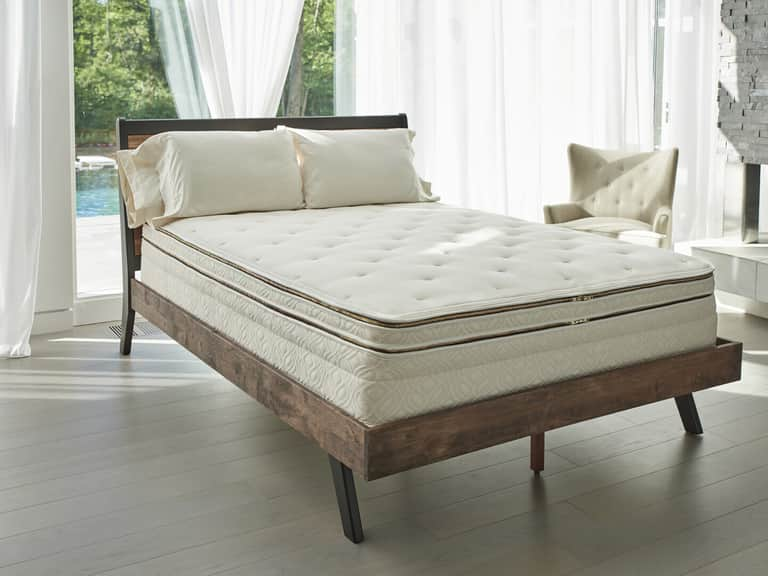
The phrase “wool bed topper” covers a range of constructions. Some are thin, lightly quilted pads; others contain more fill and create a distinctly loftier surface. A wool-filled topper may be made with a cotton shell, secured by quilting, and attached to the mattress with corner straps. Differences that look small on a product description can be surprisingly consequential in daily use. A good choice begins not with a promise of perfect sleep, but with a clear sense of what you want the layer to do.
What a wool topper can—and cannot—change
A mattress topper sits on the sleep surface to add a layer of comfort or protection. In the case of wool, the filling contributes a soft, slightly resilient cushion. It may take the edge off a surface that feels too hard, smooth out minor unevenness, or introduce a more yielding first impression. How much it changes the bed depends on its thickness, the quantity and arrangement of the fill, and the mattress beneath it.
It is useful to distinguish cushioning from support. A topper can change how a mattress feels at the surface, but it generally cannot repair a deeply sagging mattress or transform its underlying support system. If a mattress dips substantially or causes persistent discomfort, adding a plush layer may simply cover the problem for a while. It is also possible for extra softness to make a bed feel less supportive, particularly if the sleeper sinks more than they find comfortable.
Wool is often described as temperature regulating. That phrase is best understood as a description of a material, not a guarantee about a person’s experience. Wool fibers can absorb and release moisture, and their crimped structure holds air, helping the material provide insulation. These qualities can contribute to a bed that feels less clammy or less sharply warm than some less breathable layers. But sleep temperature also depends on the room, clothing, sheets, mattress construction, health, and individual preference. A wool topper may help create a more comfortable setting; it cannot promise that every sleeper will feel cool in summer and warm in winter.
For people who like natural materials, wool can be appealing on its own terms. Its character is not identical to foam, down, or cotton: there is a little resilience and substance to it, rather than a sinking or featherlight sensation. Readers should look beyond broad claims and inspect the construction details. The fiber’s origin, fill content, shell fabric, certifications, and care instructions are all part of the practical story.
Loft: the difference between a hint and a change
Loft refers, broadly, to the height and fullness of the topper. A low-loft layer tends to make a restrained adjustment. It can lend the mattress a little softness and provide a buffer between the body and the surface, while leaving much of the bed’s original feel intact. A topper with more fill can create a more noticeable cushion, though it may also change how sheets fit and how securely the sleeper feels held by the mattress.
There is no universally correct amount of loft. Someone seeking to soften a firm mattress may prefer a fuller layer; someone who likes the mattress but wants a touch of added warmth may want something more modest. Body weight, preferred sleeping position, and the existing mattress all influence the result. Side sleepers, for instance, may be sensitive to pressure at the shoulders and hips, while back and stomach sleepers may place greater importance on maintaining a more level, supportive feel. These are useful considerations, not rules that can substitute for personal experience.
Descriptions such as “plush,” “cushioned,” or “medium” are not consistent measurements. A lofty topper can feel less dramatically soft when the fill is firmly quilted, while a thinner layer with a looser construction may compress readily. If specifications are available, compare the topper’s thickness, fill weight, quilting pattern, and shell material rather than relying on a single adjective. When those details are not provided, the care label and construction notes may still answer important questions.
Loft also changes with use. Any filled bedding layer may compress somewhat under repeated pressure, though the degree varies with materials and construction. Fluffing or airing a topper, if its maker recommends it, can help it recover some of its shape. Rotating it from head to foot may spread wear more evenly, provided the design permits rotation. A topper that is fixed to a particular orientation or has a distinct top and bottom should be handled according to its instructions.
Construction, shell, and attachment
The filling receives most of the attention, but the shell is the part in closest contact with the fitted sheet and, by extension, the sleeper. Cotton is a common shell material because it is familiar, washable in some constructions, and able to provide a breathable covering. A tighter weave can help keep filling contained; a softer hand may contribute to the overall feel. The topper is still normally covered by a fitted sheet, so its shell need not feel like a luxury sheet. It does need to be durable enough for routine handling and compatible with the care the product requires.
Quilting helps keep filling distributed. A regular quilt pattern can reduce the chance that wool shifts freely from one section to another, though stitching patterns and fill placement differ between products. Inspect the seams and quilting descriptions, especially if you expect to move or wash the topper. The design may also influence how evenly the layer cushions the bed and whether it develops thin or lumpy areas over time.
Attachment is unglamorous, until a topper migrates several inches during the night. Corner straps, elastic bands, or a fitted skirt can help hold a layer in place. Each method has trade-offs. Straps are straightforward and can fit a range of mattress profiles, but their reach and strength matter. A skirt may offer a more enveloping fit but needs to match the mattress depth. Before ordering, measure the mattress, including any existing pad or protector that will remain underneath the topper.
Do not assume that a familiar bed size guarantees a precise fit. A mattress sold as queen, for example, may have an unusual depth or a thick pillow-top surface. Check the topper’s actual dimensions, its recommended mattress depth, and whether the manufacturer allows for any stretch in the attachment. A correct fit helps limit bunching and makes it less likely that the topper will pull against the sheet.
Seasonal comfort, without the seasonal mythology
Wool bedding is often framed in winter terms. It can certainly add warmth: the fiber’s structure traps air, and a filled layer adds insulation between the sleeper and the mattress. Yet wool’s usefulness is not limited to cold weather. Because it can take up and release moisture vapor, it may feel more comfortable than a layer that holds dampness against the body. This is one reason wool is frequently considered for year-round bedding.
The phrase “temperature regulating” can make a material sound more powerful than it is. A wool topper does not detect the season and adjust itself. It provides a set of physical properties that interact with the rest of the bed. On a cold night, its insulation may be welcome. In a warm room, its ability to manage moisture may be useful, but the added layer can still feel too warm for some sleepers. What matters is not the reputation of wool in the abstract but the response of the complete bed in the room where it is used.
Seasonal changes can also be managed by adjusting the bedding around the topper. A lighter sheet, fewer blankets, or more airflow in the room may make a substantial difference. In winter, a warmer duvet or a more sheltered sleep environment may be preferable to choosing a thicker topper. Thinking in layers makes the bed easier to adapt than asking one product to solve every seasonal problem.
For an apartment with uneven heating, a sunny bedroom, or windows that admit a draft, the room itself can be an active participant in the sleep climate. Curtains, ventilation, fans, and the arrangement of blankets may matter as much as the fill under the sheet. A topper is one part of that system—often a pleasant one, but not the whole weather report.
Care: the gentler routines that preserve the fill
Wool toppers can require more careful maintenance than a cotton pad designed for regular machine washing. The first rule is also the least romantic: follow the maker’s care label. Wool, cotton shells, quilting, and attachment components may respond differently to water, heat, agitation, and cleaning products. A topper that looks sturdy is not necessarily suitable for a household washing machine.
Regular airing is a low-effort habit that can help keep bedding feeling fresh. If the care instructions permit it, remove the sheets and let the topper breathe in a dry, well-ventilated space. Avoid leaving it in direct sun for long periods unless the maker specifically recommends sunning; strong light and heat can affect materials. Airing is not the same as washing, but it can reduce the need for unnecessary cleaning.
For a small spill, act promptly. Blot rather than rub, using a clean cloth to absorb as much liquid as possible. Rubbing can push moisture farther into the filling or disturb the surface. Follow the manufacturer’s spot-cleaning advice, and do not saturate the topper. Before putting sheets back on, let the affected area dry completely. A damp enclosed layer can develop an unpleasant odor and may be difficult to dry evenly.
Do not assume that a removable cover means the wool itself can be washed. The cover and fill may have separate instructions, and some toppers are intended for professional cleaning or only for spot treatment. Heat, harsh detergents, and forceful agitation can felt or distort wool fibers. If the instructions are unclear, asking the maker for written guidance is wiser than experimenting with an expensive bedding layer.
A mattress protector can add a practical barrier between the topper and ordinary spills, sweat, or skin oils, provided it fits smoothly and does not compromise the feel you want. Choose a protector compatible with the topper and mattress, and wash it according to its own label. It is easier to launder a fitted protective layer than to clean a large wool-filled topper frequently.
A measured approach to choosing one
Before comparing options, describe the problem you want to solve in plain language. Is the mattress too firm at the surface? Does the bed feel clammy? Are you looking for a natural fiber layer, or hoping to add a little cushioning without changing the bed substantially? The answer will help distinguish a useful purchase from a general desire to improve the bedroom by one more degree.
- Decide how much change you want. A lightly filled pad and a loftier topper do different jobs. Choose based on the scale of the adjustment you have in mind.
- Measure the whole mattress. Confirm length, width, depth, and any added layers that will sit underneath. Check how the topper attaches and what mattress depth it can accommodate.
- Read the materials list. Look for the stated fiber content, shell fabric, and construction. If organic or other certification claims matter to you, check which component is certified and by whom rather than treating a broad label as a complete description.
- Study care requirements. A topper that needs professional cleaning may be perfectly suitable, but it is a different household commitment from a washable pad. Consider how you will manage spills and routine airing.
- Check return and trial terms. The feel of a filled layer is personal. Confirm whether it can be returned after opening, whether shipping is covered, and whether any hygiene conditions apply.
- Think about the mattress beneath it. A topper can adjust surface comfort, but it will not reliably correct structural sagging or inadequate support.
If possible, evaluate the bed over several nights rather than making a decision from a brief first impression. A new layer may initially feel unfamiliar, and the fitted sheet may sit differently. Notice whether you remain comfortable through the night, whether the topper stays in place, and whether the bed becomes too warm. Keep the rest of the bedding as consistent as practical while you assess the change.
Common questions about wool toppers
Will a wool topper keep me cool in summer?
It may help manage moisture and create a breathable layer, but it is not a cooling device. Its insulation can still feel warm to some people, particularly in a hot room or under heavy bedding. The result depends on the topper’s fill and construction, the mattress, the sheets, and the sleeper.
Can a wool topper soften a firm mattress?
It can add surface cushioning, with the amount of change depending on loft, quilting, and fill. It is not guaranteed to relieve pressure or suit every sleeping position. If the mattress is sagging or uncomfortable because its support has deteriorated, a topper may not address the underlying issue.
How often should a wool topper be cleaned?
There is no universal schedule. Follow the care label, air the topper when appropriate, and address spills promptly. Frequent washing is not necessarily beneficial and may damage wool or the construction. A washable protector can help limit the need for direct cleaning.
Does wool bedding have to be thick to feel comfortable?
No. A thin layer may provide the modest cushioning or fiber feel a sleeper wants. More loft creates a larger change, but thickness alone does not determine comfort. Fill density, quilting, the shell, and the mattress beneath all contribute.
The useful pleasure of a well-chosen layer
A wool bed topper is neither a medical device nor an elaborate answer to every problem that follows a long day. It is a material choice, and a fairly intimate one: a soft boundary between the sleeper and the mattress, felt in the small adjustments of pressure, warmth, and moisture. The best version is not necessarily the thickest, most expensive, or most persuasively described. It is the one whose construction suits the bed, whose care fits the household, and whose feel is agreeable after the novelty has passed.
There is a certain satisfaction in getting those details right. The topper fits without wandering; the sheet lies flat; the bed feels a little more inviting, but not transformed beyond recognition. When the weather shifts, the rest of the bedding can shift with it. And when the layer needs attention, a brief airing or careful spot treatment is already part of the routine. Wool’s qualities are real, but they are best appreciated without exaggeration: as a breathable, resilient fiber that can add comfort and help manage moisture, within the limits of the room and the bed around it.
That is a modest promise, which is often the useful kind. A topper will not settle every question a sleeper brings to bedtime. It can, however, make the surface beneath the sheet feel more considered—and sometimes that is enough to make the bed seem less like furniture and more like a place to rest.